

Screenshot 2025 11 28 154513 (1)

Transitions at Red Bus

Change can be overwhelming for us as adults - imagine how it can feel for a young child!

At Red Bus, we provide an environment of comfort and stability from the start - but change is inevitable. Children move from one room to another as they grow, before eventually leaving the setting all together to start school. These movements can be incredibly successful for children when planned for appropriately by the important people in their lives - that's you as parents, and us as caregivers! The foundation of a positive transition lies in a strong, respectful relationship between the two.

For practitioners, having honest conversations with parents from the start gives us the knowledge to extend your child's learning and experiences. Information you give us helps us build children towards their next milestones and support them as the unique individual they are.

For parents, getting to know those who will care for your child means you can develop confidence in this next step. We know it’s a big change, for everyone – but the quality and consistency of your child’s care will not. Learning everything you can about your child’s next step can reduce your own worries and feel empowering.

Most importantly, a great relationship between families and practitioners reassures children as they begin this next step. The more confident and knowledgeable parents and caregivers are, the more this will have a positive impact on children as they begin the transition.

What we do at Red Bus

When it comes to moving from one room to another, our goal is to enable both children and families to become as familiar as possible with where children are going, and who will be there to look after them.
  • The two room managers will meet to discuss the next group of children moving, assign Key People, and confirm the dates for settling in.
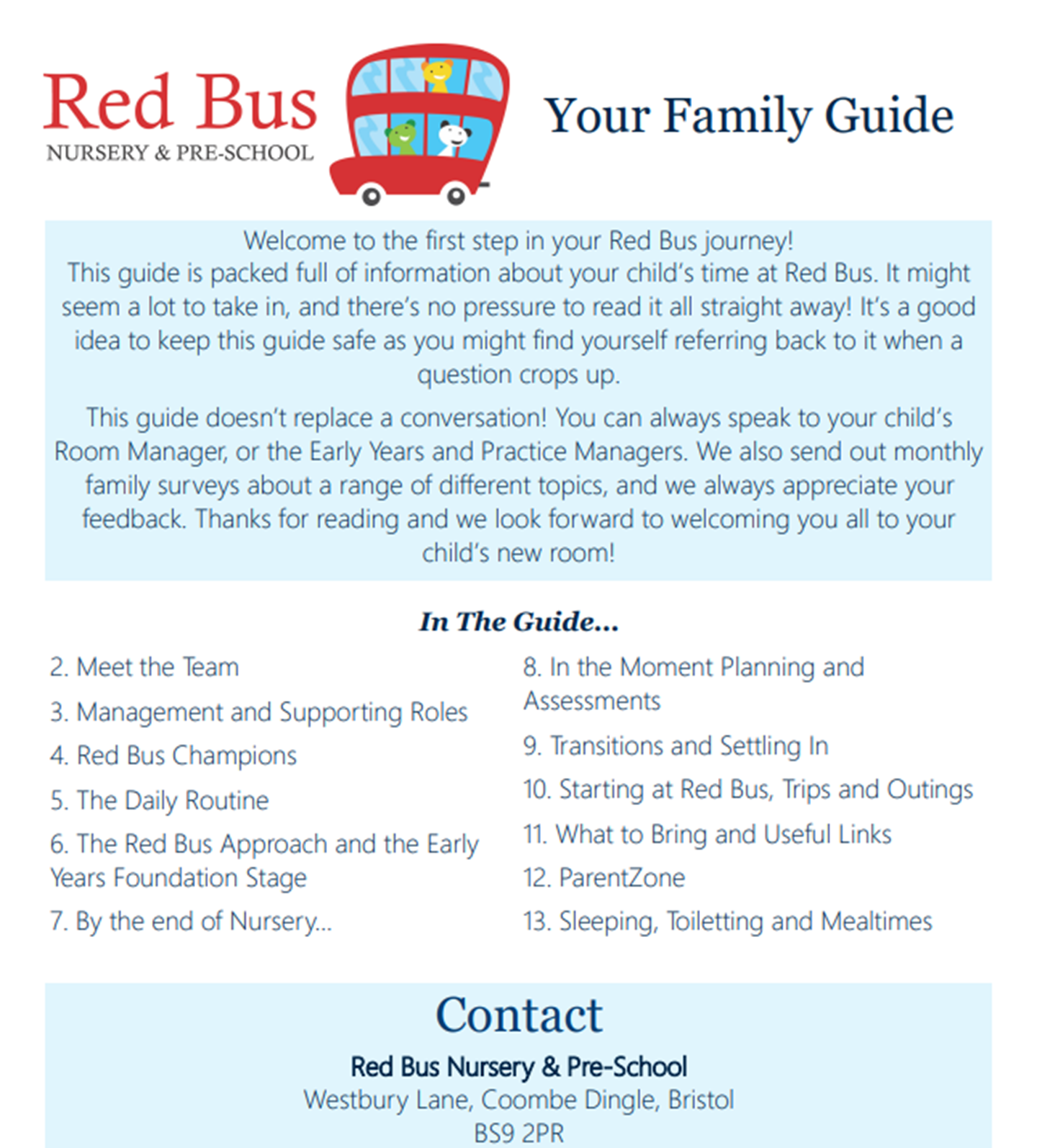
  • The parents of children transitioning will receive an individual letter detailing the dates of their move, as well as our Red Bus Welcome Guide which includes information like the daily routine, pictures of the staff team, and the goals we support children to achieve whilst in that room.
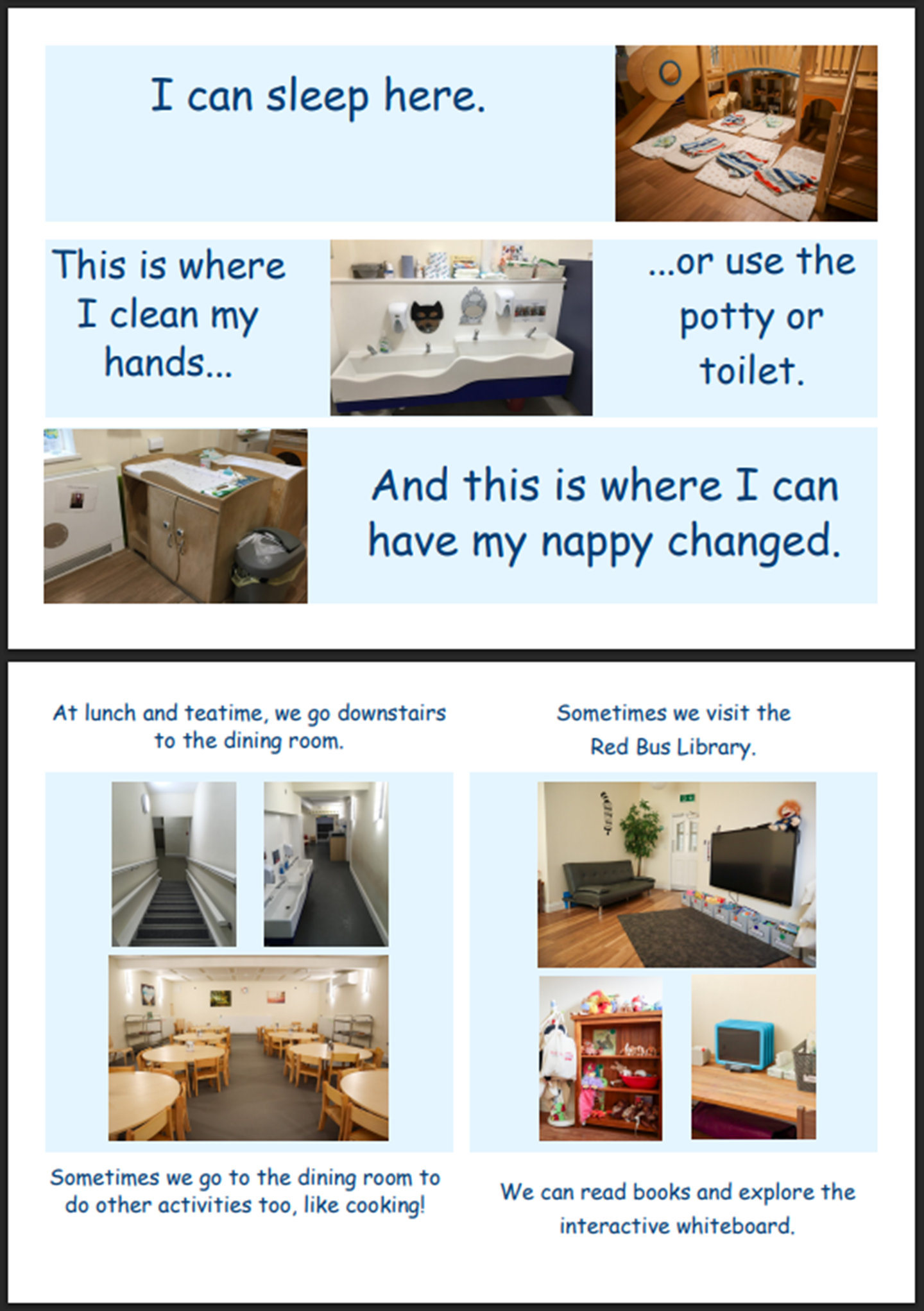
  • There will also be an individual book for your child, which contains photos of their new key person and lots of photographs of things they can play with. It is a great tool to use to talk to the children about their move!
  • Whilst our team will share information about transitioning children, it’s also vitally important we get family input during this time. Parents will also be invited to complete a new ‘All About Me’ booklet, to update us on their child’s routine, likes and dislikes, and any other information we might need.
  • Screenshot 2025 11 28 154733
  • Screenshot 2025 11 28 154513
  • Screenshot 2025 11 28 154431
  • We host Transition Evenings two to three times a year, where staff stay on after hours to meet the families of children moving into their room over the coming months. It’s a great opportunity to take a look around, get to know the new team and ask any questions you might have about this new environment.
  • Your child’s Key Person will complete a Transition Assessment, which is then published on ParentZone. You’ll be invited to arrange a meeting to discuss your thoughts on the assessment, and their move to the next room generally.
  • In the weeks before children start to settle, the current Key Person completes a Transition Questions checklist – this covers a lot of information from sleep times and medications taken, to how to make them feel better when they are sad! This, alongside the Transition Assessment, is given to the new Key Person to make sure they are as informed as they can me about their new Key Child.
  • During the first week of settles, children are joined by a member of staff from their previous room. This gives time for the child to settle into the new environment, with someone who knows all about them and provide comfort and clarification where needed. Into the second week, the new Key Person begins to take over more responsibility for completing observations and handovers – building bonds not only with the child, but their family too.

When the process focuses on consistency and continuity of care, children can transition smoothly between rooms. This sets children up for future success in managing changes, developing resilience and processing their feelings throughout their lives.